“Every recovery journey is different, and every small improvement deserves recognition.”
Two people can experience the same medical condition, undergo similar treatments, and still have completely different recovery experiences. One patient may regain mobility quickly, while another may need more time to rebuild strength, coordination, or confidence in everyday activities. This happens because recovery depends on several individual factors, including overall health, age, the severity of the condition, emotional well-being, and response to therapy. Rehabilitation is therefore not a process that follows one fixed timeline for everyone. Understanding these differences helps patients and families develop realistic expectations and recognise the importance of personalised care. Choosing a suitable Rehabilitation Hospital in Chennai can help patients access structured rehabilitation programmes based on their individual conditions, abilities, and recovery goals.
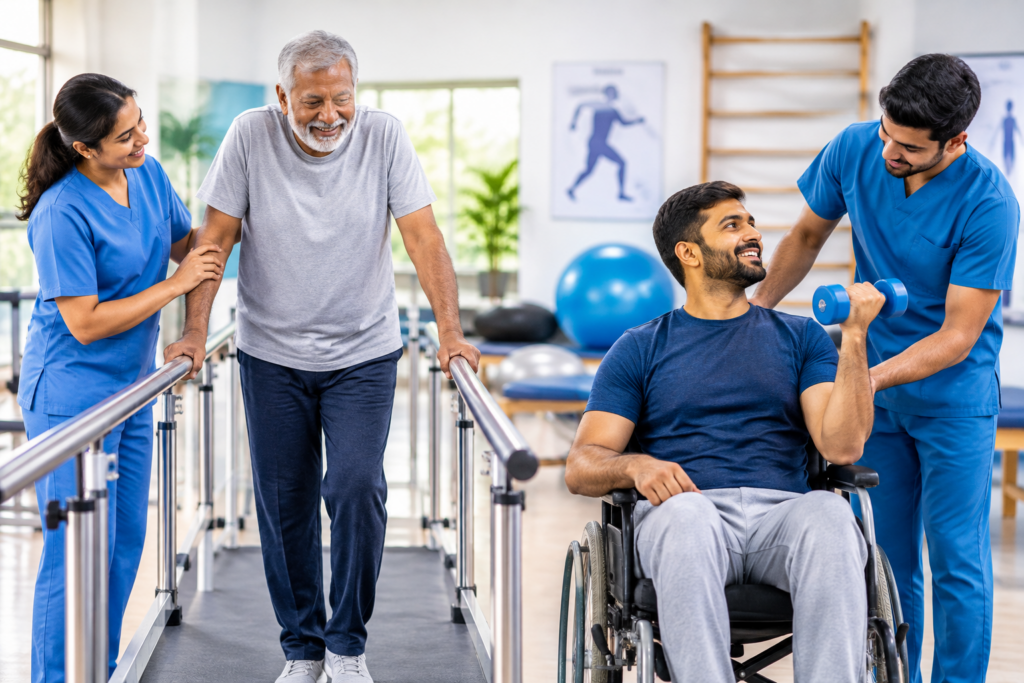
No two patients are ever in the same condition physically or medically when they start rehab. Two people can have the same injury or surgery, and start treatment differently, with very different results. Some patients can stand with some support while others may need support in the initial stages of standing. These differences will affect the planning of rehabilitation programmes and activities that are introduced first. Knowing where a patient is starting allows health care professionals to set appropriate treatment goals and avoid putting them under undue stress.
A medical condition may affect the rehabilitation process depending on the type and severity of the condition. People who have had a stroke might need assistance with physical movement, speech, or coordination, while people who have had a fracture or joint replacement surgery may be working on improving their mobility and physical strength. However, some neurological disorders may also require ongoing rehabilitation as they involve various parts of the body. Doctors or other health care providers can use this information to choose appropriate therapy and plan treatment for each person.
While age may affect the type of response to rehabilitation, it alone will not affect recovery outcomes. Other issues that may impact progress include overall health, physical fitness, post-surgical status, current medical and health conditions, and past exercise history. For a person with other health issues, problems could be different from those of an older person who is physically fit but suffers from an injury. Rehabilitation plans should take into account the overall health history, not be based solely on age.
Two patients who are involved in rehabilitation programmes that are similar may react differently to the same therapeutic activities. Some children may improve their balance and co-ordination progressively; others may require further practice to achieve effective and comfortable movement. The intensity of the pain, the level of fatigue, physical restrictions, and the type of condition can all affect a patient’s reaction to treatment. These responses are continually monitored by rehabilitation professionals, and changes are made as required to ensure that the programme is appropriate and manageable.
Recovery is more than just physical. Patients might feel frustrated, not know what to expect, be fearful, or lose their confidence in their abilities after undergoing changes. A person who has always lived on his or her own may not want to take help with daily living activities. Anxiety and mood can impact motivation to engage in therapy, to participate in treatment, and to adapt to a new schedule. These experiences are recognized to enable more supportive and patient-centred rehabilitation services by health professionals.
The surroundings in which a patient continues to recuperate can be of significance to their recuperation experience. Family members can help perform daily tasks, encourage family to do recommended exercises, and support family’s routine after hospital sessions. But the kind of support needed will be different in each patient. Some will require some help with moving around and personal care needs, and others will only require encouragement and assistance in implementing their rehabilitation plan.
It is not possible to compare the rate of recovery of one patient with another patient, as this may lead to false expectations. Despite similarities in medical conditions, the time frame could vary because of severity, prior treatment, physical condition, and reaction to treatment. Not everyone will reach certain goals at the same time, and some patients will require more time and assistance to reach them. Rehabilitation should thus be based on individual progress and not a person’s schedule.
Recovery should not be considered in terms of the time it takes for the patient to resume normal activities. Progress might be measured in small steps, such as being able to sit up on their own, have some balance, take a few steps, or perform a daily activity with reduced support. Monitoring these achievements provides healthcare providers with insights into the patient’s progress and whether the rehabilitation program needs to be adapted. Individual recognition of achievements can also help to motivate patients to continue their journey of recovery.
Recovery is not a race, and meaningful progress does not look the same for every patient. Differences in medical conditions, physical abilities, emotional well-being, and personal circumstances make individualised rehabilitation essential. What matters is identifying the challenges each patient faces and creating a care plan that supports their specific needs and abilities. Choosing a suitable Rehabilitation Hospital in Chennai can help patients access coordinated rehabilitation support, professional guidance, and therapy programmes suited to their recovery goals. With consistent care, realistic milestones, and the right support system, patients can work towards regaining confidence, improving daily functioning, and achieving greater independence at their own pace.
Recovery depends on several factors, including the medical condition, injury severity, age, overall health, emotional well-being, and response to treatment. Each patient may therefore require a different rehabilitation approach.
Age can influence physical strength, endurance, and recovery needs. However, overall health, existing medical conditions, and individual abilities are also important when planning rehabilitation.
Depending on the patient’s condition, rehabilitation may involve physiotherapy, occupational therapy, speech therapy, mobility training, and psychological support.
Family members can encourage participation in recommended activities, assist with daily routines, attend relevant consultations, and provide emotional support throughout the recovery process.
Consider the availability of qualified rehabilitation professionals, therapy options, personalised treatment plans, medical supervision, patient facilities, and family support services.
Ashram Foundation – One of the Best alcohol Rehabilitation Centre in Chennai was started in the year of 2007. We are Best De Addiction Centre in Porur, Chennai, De Addiction Centre in Chennai, old age homes in Chennai, Best Rehabilitation Centre in Porur. We assist anyone to recover from alcohol addiction.

Group Therapy :Group therapy is an exact form of counseling which is utilized to treat psychological disorders like alcohol addiction.

Yoga Therapy : It is carried out by an experienced and certified Instructor tells clearly how mind works and how it’s possible to utilize the mind to get liberation.

Rehabilitation Services : We offer Job assistance, Vocational Counseling, and Training Programs for individuals who are in require of rehabilitation services